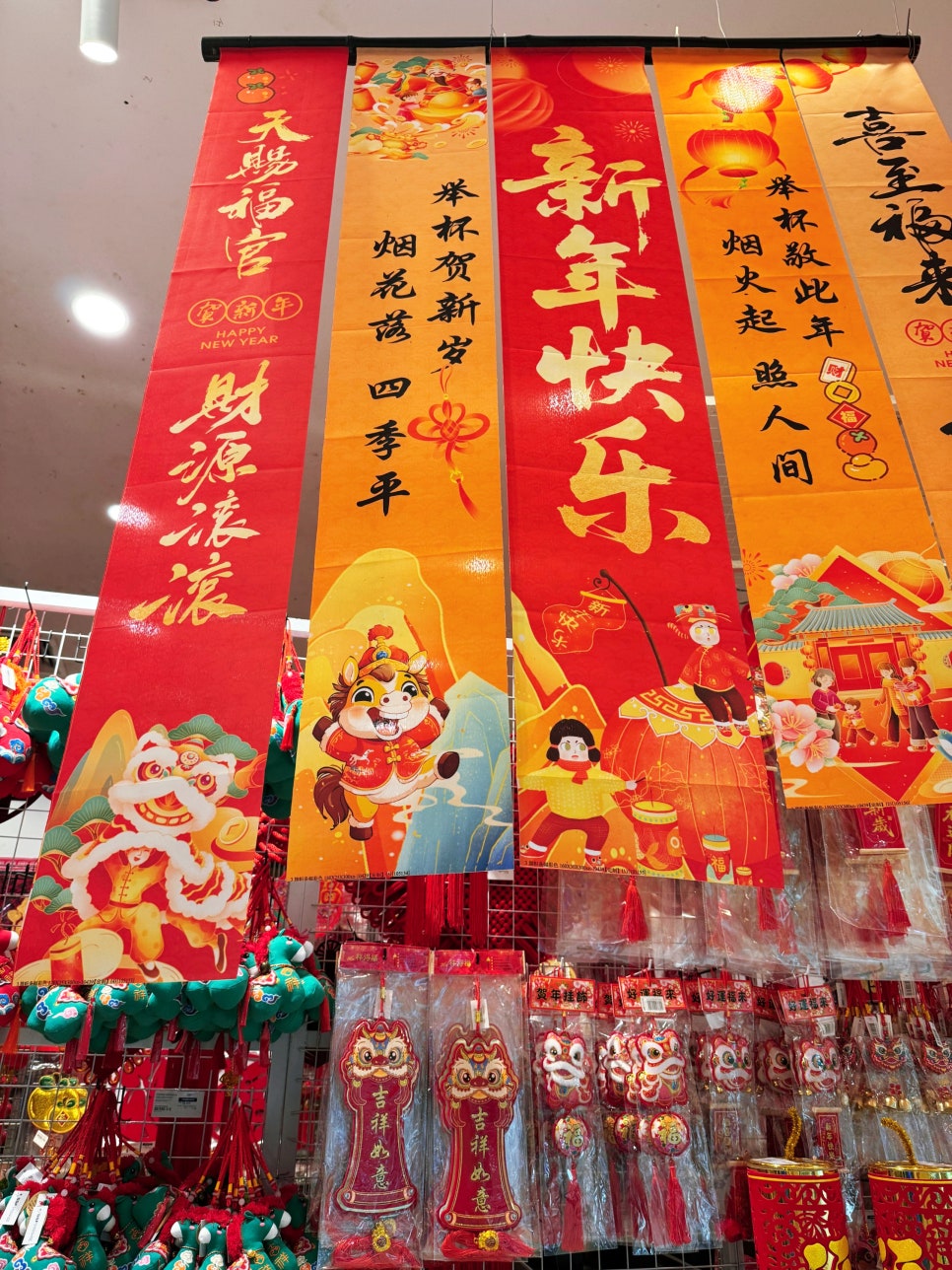
In Kuala Lumpur, Lunar New Year is not subtle. Chinese New Year decorations in Malaysia are impossible to miss during the Lunar New Year season.
Shopping malls change their exterior designs, home decor stores fill their shelves with red and gold ornaments, and supermarkets display festive gift sets.
This article is based on direct observations from retail spaces in Kuala Lumpur, including Pavilion Mall and SSF Home, focusing on the symbols commonly seen during the Year of the Horse.
Chinese Population Context in Malaysia
As of the third quarter of 2025, Malaysia’s total population is estimated at approximately 34.3 million. Among them, ethnic Chinese Malaysians are estimated to number between 7.1 and 7.5 million, accounting for roughly 22% of the population.
In Kuala Lumpur, the proportion is higher. With an estimated population of 2.07 million, around 730,000 residents are of Chinese descent, representing approximately 35%.
This demographic context explains why Lunar New Year decorations are prominently visible throughout the city.
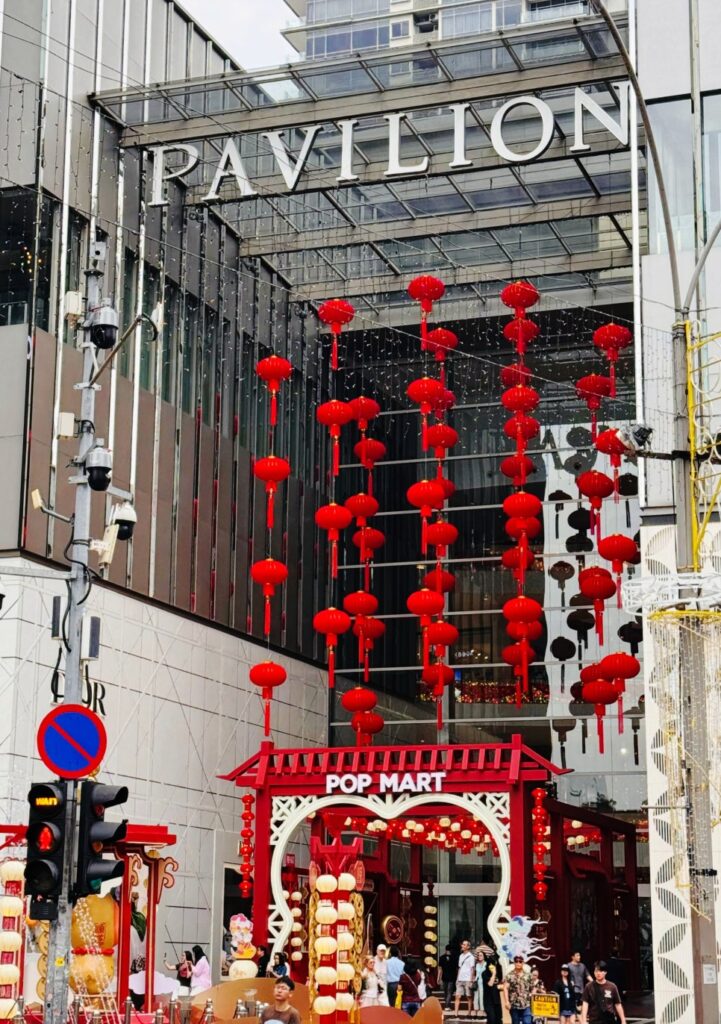
Pavilion Mall Exterior Decorations
During the Lunar New Year period, Pavilion Mall in central Kuala Lumpur redesigned its entrance with large red lantern installations.
The color red is traditionally associated with protection and auspiciousness in Chinese culture, which explains its dominance in seasonal decorations.
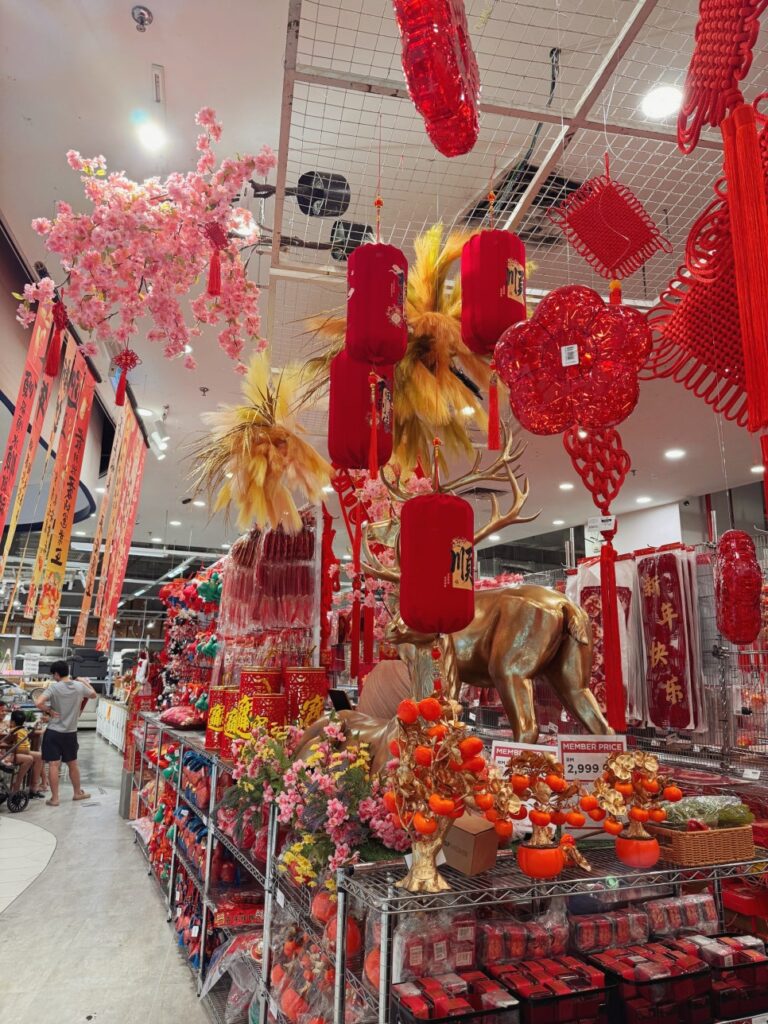
SSF Home: Observing Seasonal Interior Decorations
SSF Home, a Malaysian home living brand established in 1989 and operating over 40 stores nationwide, dedicated part of its retail space to Lunar New Year decorations.
Its origins as an artificial flower wholesaler are still visible in its extensive decorative plant displays.
Red-themed ornaments dominated the store, reflecting traditional associations with good fortune and warding off negative spirits.
Traditional Chinese New Year Decorations in Malaysia :Spring Couplets
Spring Couplets Observed in Store Displays
Below are the specific spring couplets(chūnlián, also called duìlián) I observed, categorized by color as they were displayed in the store. The couplets below are explained in the same order as they appear in the photo, beginning with the one on the far left.
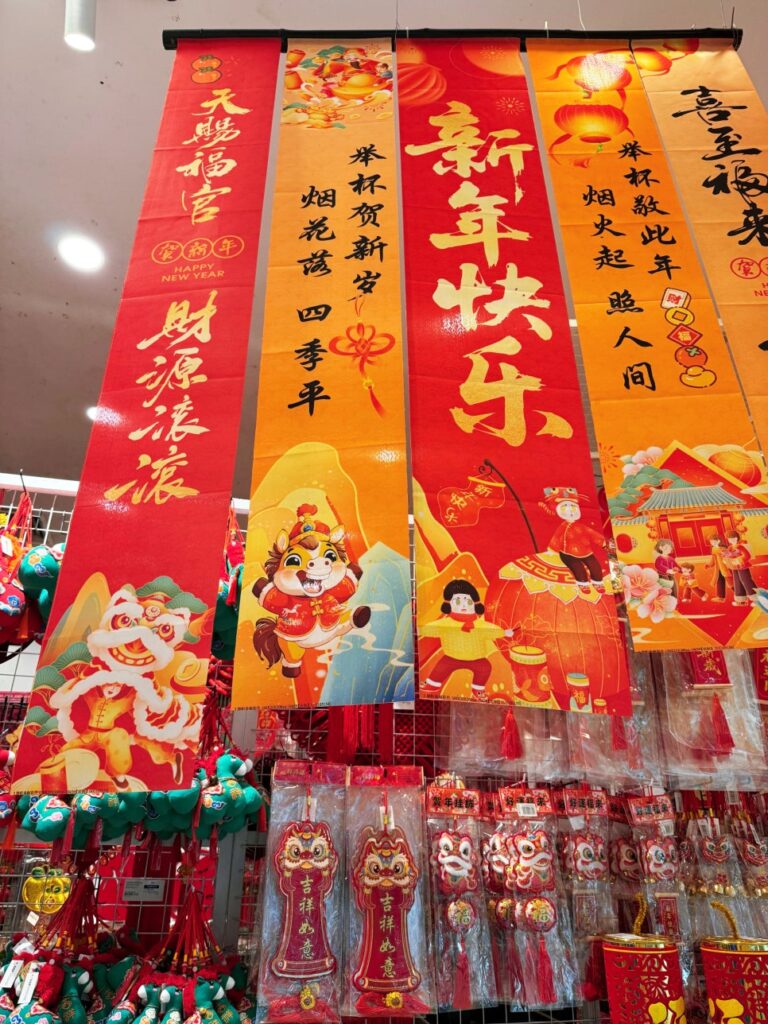
First Couplet (Red)
天賜福宮 (tiān cì fú gōng)
Literal meaning: “A home blessed by heaven.”
財源滾滾 (cái yuán gǔn gǔn)
Meaning: “Wealth flows in continuously, like rolling waves.”
Second Couplet (Orange)
擧杯賀新年 (jǔ bēi hè xīn nián)
Meaning: “Raise a cup to celebrate the New Year.”
烟花落 四季平 (yān huā luò, sì jì píng)
Meaning: “As fireworks fall, may peace remain throughout all four seasons.”
Third Couplet (Red, Center)
新年快樂 (xīn nián kuài lè)
Meaning: “Happy New Year.”
Fourth Couplet (Orange)
擧杯敬此年 (jǔ bēi jìng cǐ nián)
Meaning: “Raise a cup in respect to this year.”
烟火起 照人間 (yān huǒ qǐ, zhào rén jiān)
Meaning: “As fireworks rise, they illuminate the human world.”
Fifth Couplet (Yellow)
喜至福來 (xǐ zhì fú lái)
Meaning: “When joy arrives, fortune follows.”
These couplets resemble a Korean seasonal tradition known as Ipchun Daegil (입춘대길).
Ipchun Daegil literally means “Great fortune at the beginning of spring.”
It is traditionally written in calligraphy and posted on doors around Ipchun (the first solar term marking the start of spring in the traditional East Asian calendar).
Like Chinese spring couplets, it expresses a wish for prosperity and good fortune at the threshold of a new seasonal cycle.
Horse Ornaments: How They Are Used
Because 2026 corresponds to the Year of the Horse, horse-shaped ornaments were widely available in SSF Home.
These ornaments were not just decorative figurines. Most were designed with a loop or string at the top, making them easy to hang.
They are commonly:
- Hung on walls or door handles
- Placed inside cars, often near the rear-view mirror
- Displayed at shop counters
- Used as decorative accents on potted plants
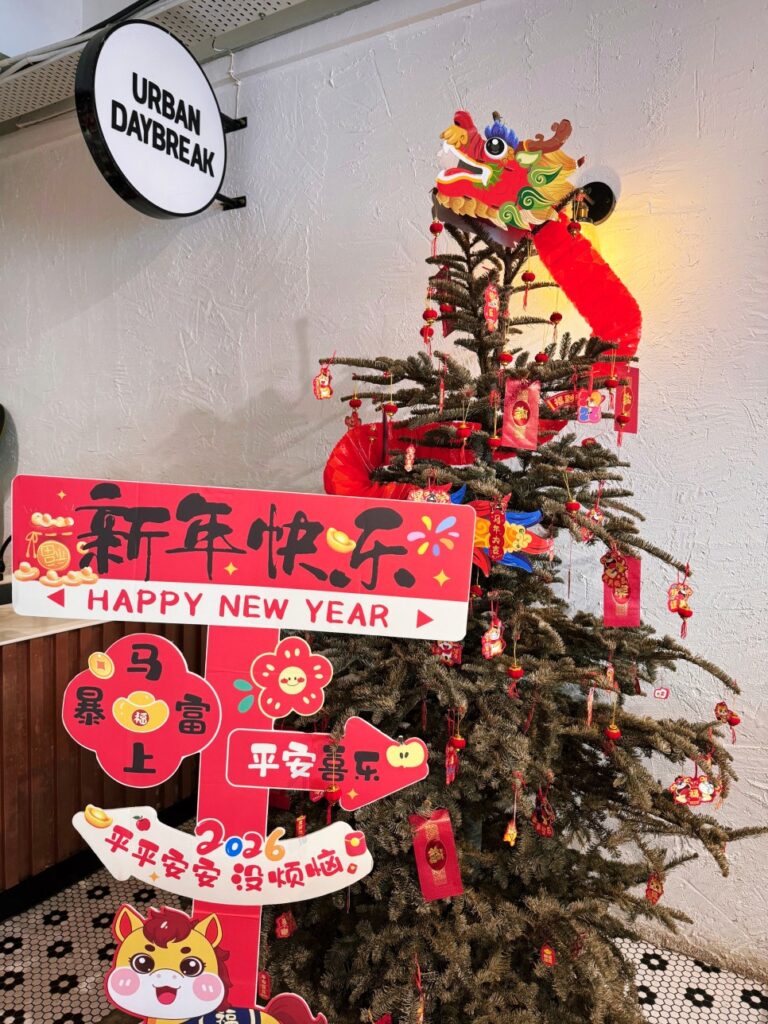
I was told that some people even hang them on mandarin orange trees or flowering branches, in a way that resembles Christmas ornaments.
In one brunch café I frequent, the Christmas tree had not been removed after December — instead, it was redecorated with Lunar New Year ornaments.
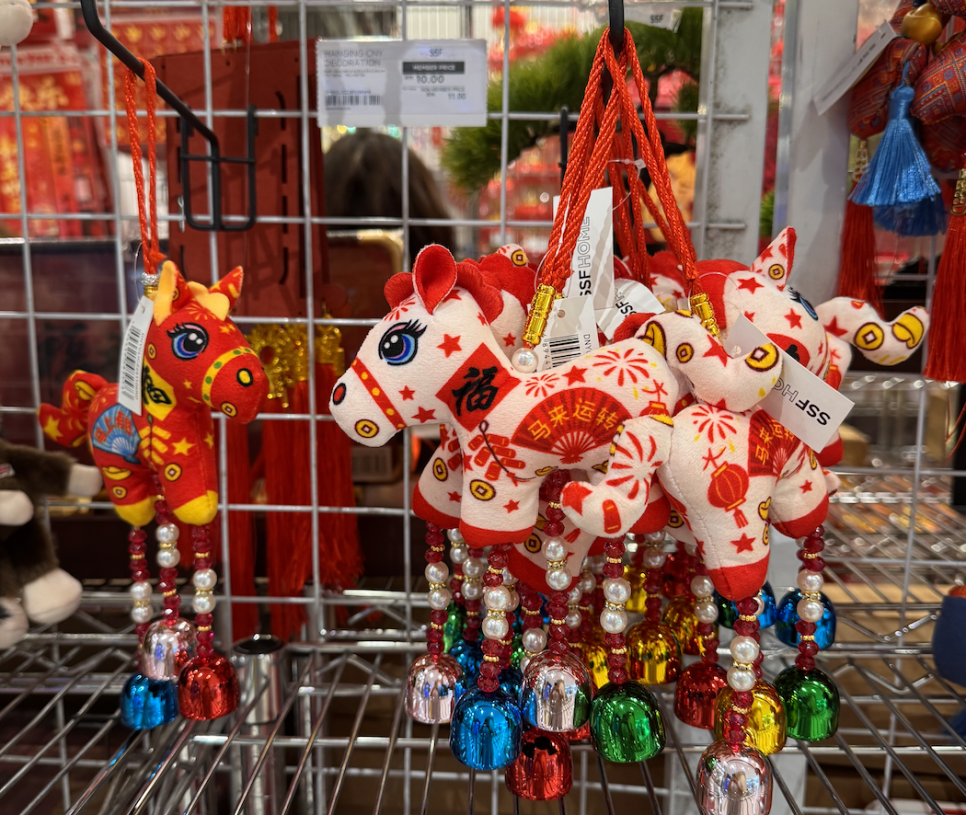
Zodiac Horse Ornaments in Malaysian Chinese New Year Decorations
One white horse ornament displayed the phrase:
马来运转 (mǎ lái yùn zhuǎn)
This is derived from:
时来运转 (shí lái yùn zhuǎn), meaning “When the time comes, fortune turns.”
In the ornament version, the character 时 (time) is replaced with 马 (horse).
The phrase also creates an additional layer of meaning in Malaysia, as 马来 can refer to “Malay,” producing a localized linguistic nuance.
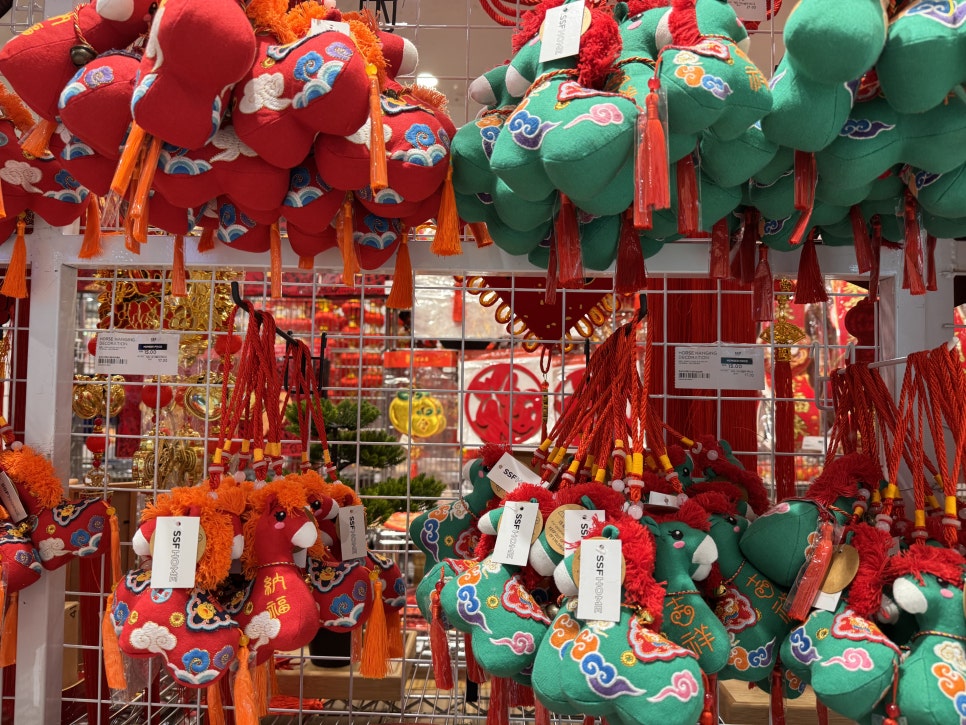
Among the horse ornaments I observed, the red and green versions carried different phrases printed on their bodies.
Red horse ornament: 纳福 (nà fú)
Meaning: “To receive fortune.”
It conveys the idea of welcoming incoming blessings and actively embracing good luck.
Green horse ornament: 吉祥 (jí xiáng)
Meaning: “Auspiciousness” or “good fortune.”
It expresses the wish for things to proceed smoothly and favorably.
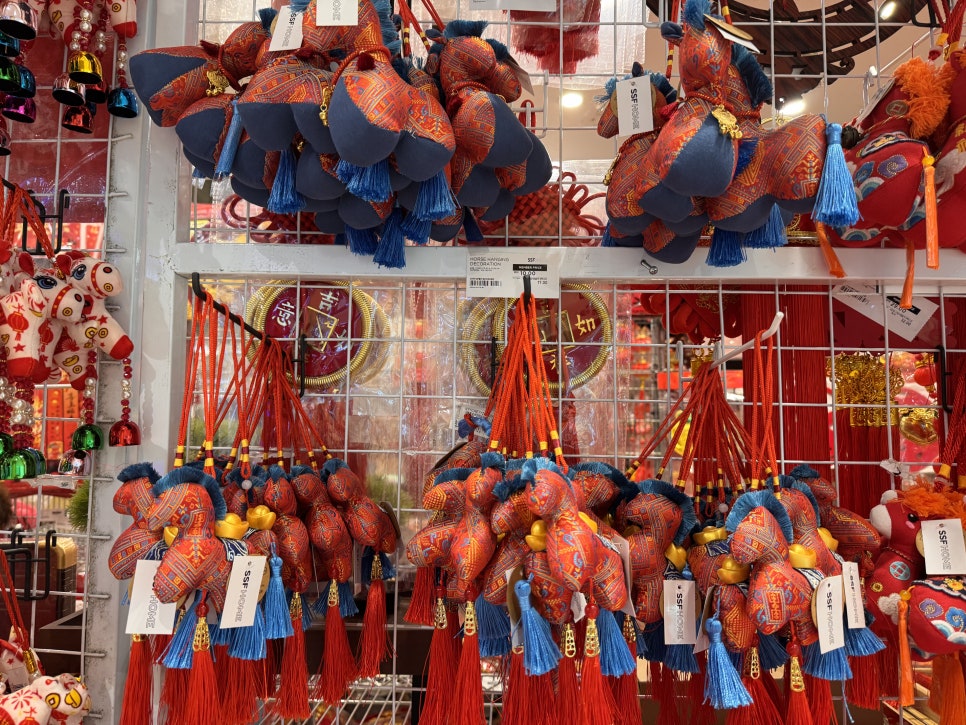
Yuanbao (Gold Ingot) Decorations
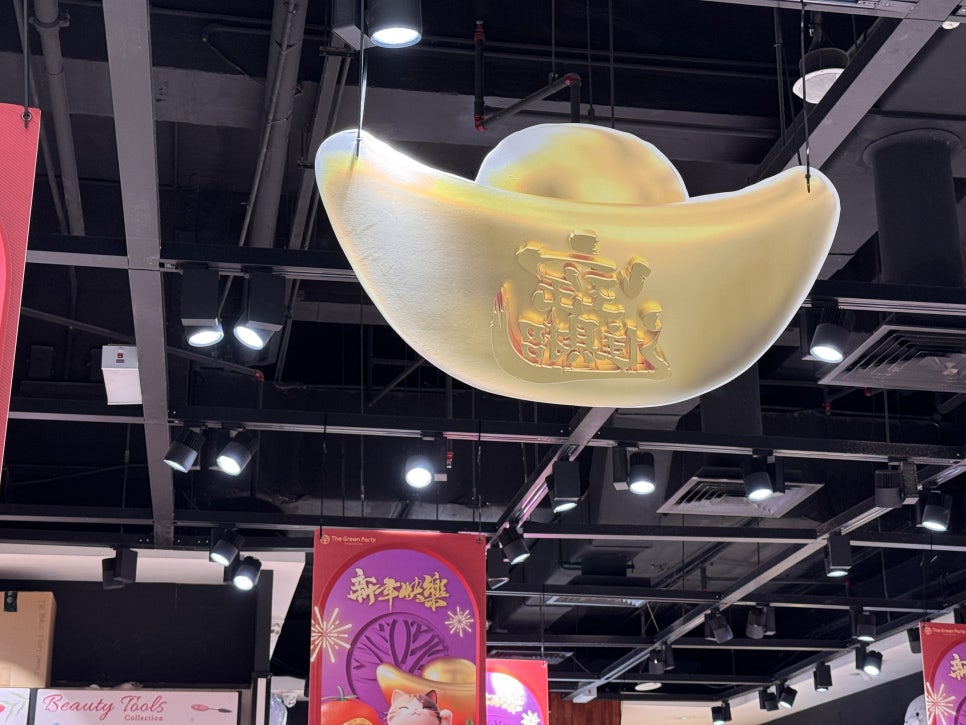
Another recurring decorative element was the gold boat-shaped object known as yuanbao (元寶).
Historically, yuanbao were gold or silver ingots used as currency from the Qin Dynasty through the Qing Dynasty.
Unlike standardized state-issued coins, they were often crafted by individual goldsmiths.
In decorative form, the shape symbolizes accumulated wealth and prosperity.
These ingots appeared both as standalone ornaments and attached to zodiac decorations.
Commercial Adoption: Starbucks Year of the Horse Goods
Even global brands adapted to the seasonal symbolism.
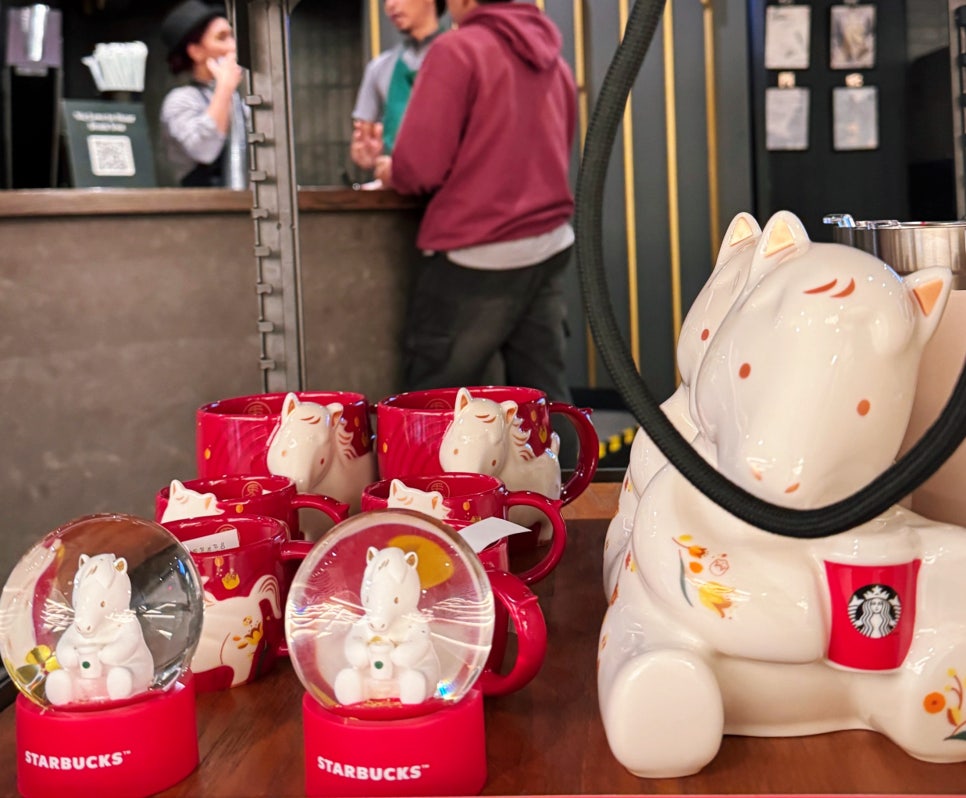
Starbucks Malaysia released Year of the Horse merchandise, including espresso cups and mugs featuring horse motifs against red backgrounds.
The design style differed from typical cute cartoon interpretations, instead presenting more sculpted and embossed horse imagery.
Other products included snow globes and larger ceramic horse figures.
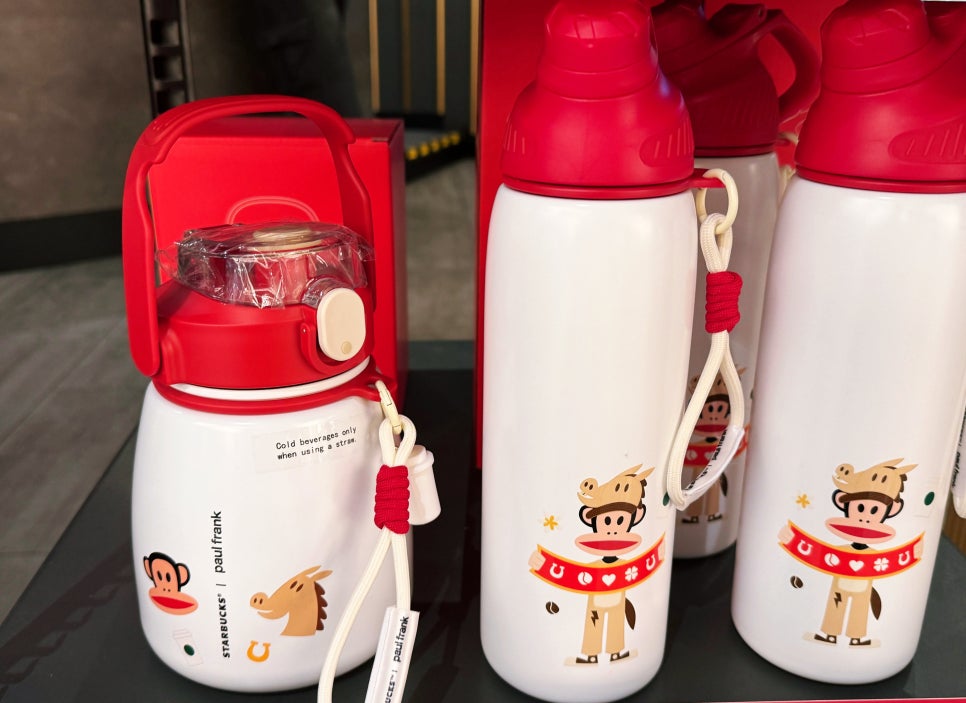
In addition, Starbucks launched a collaboration line with Paul Frank during the same period.
Horse motifs were actively incorporated into these collaboration goods as well.
This demonstrated how zodiac symbolism extended beyond traditional decoration and into contemporary retail collaborations.
Pineapple Cakes and Linguistic Wordplay
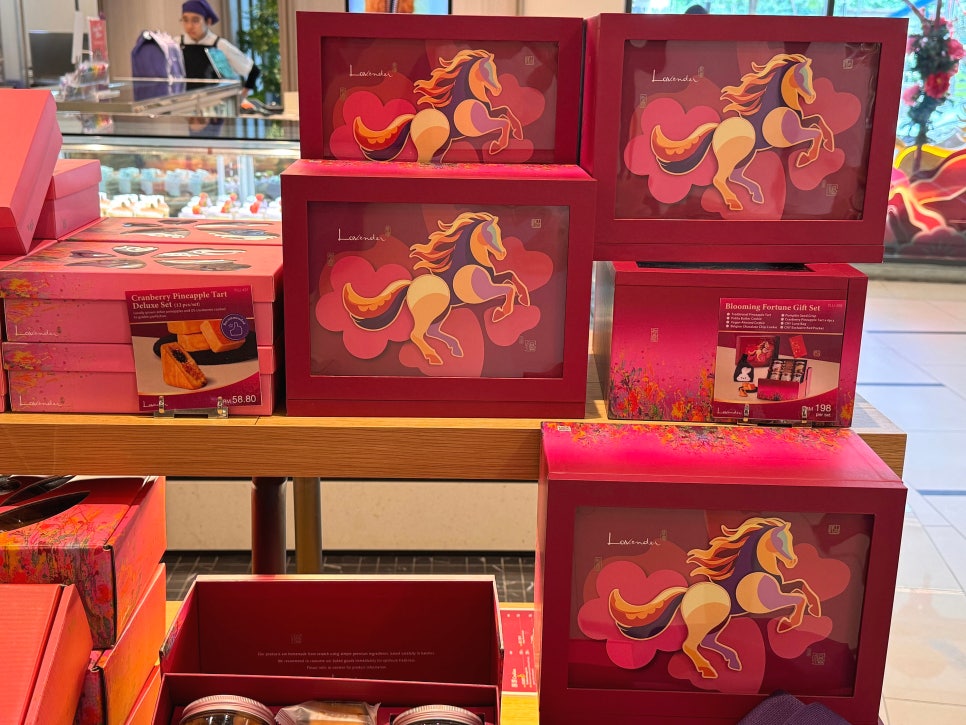
Another common Lunar New Year gift in Malaysia is pineapple tarts or pineapple-filled pastries.
According to a relative who has lived in Malaysia for over twenty years, it is customary to share pineapple-based pastries during the festive season.
Many bakeries release special gift sets featuring pineapple tarts in decorative packaging.
The symbolism behind this tradition is rooted in linguistic wordplay.
In Hokkien (a Southern Chinese dialect widely spoken among Malaysian Chinese communities), pineapple is pronounced “Ong-lai” (旺來).
The characters 旺來 literally mean “prosperity comes” or “fortune arrives.”
Because of this phonetic association, pineapple became a symbol of incoming wealth and good fortune, especially in Southern Chinese communities. The custom later spread across overseas Chinese communities in Southeast Asia, including Malaysia.
This explains why pineapple pastries are commonly exchanged during Lunar New Year in Malaysia.
Large-Scale Festive Gift Sets
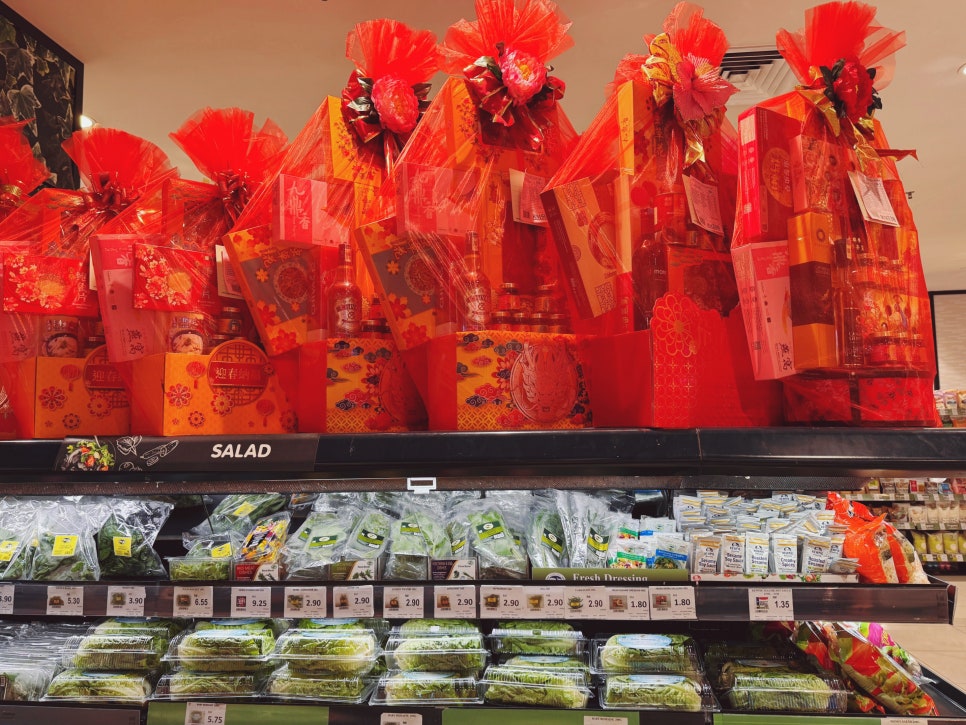
Supermarkets also displayed oversized Lunar New Year gift hampers, some nearly child-height in size.
These sets appeared to contain health supplements and assorted snacks, emphasizing abundance and visual impact.
Conclusion
From New Year banners with couplets to linguistic wordplay on ornaments, from historical yuanbao forms to contemporary retail adaptations, Lunar New Year decorations in Kuala Lumpur combine language, symbolism, and commerce.
Chinese New Year decorations in Malaysia are more than seasonal visuals — they reflect layered symbolism shaped by language, migration, and commerce.
🔹 Recommended External References
For readers interested in the brands mentioned:
- SSF Home (Malaysia) – https://www.ssfhome.com
- Starbucks Malaysia (Official Site) – https://www.starbucks.com.my
The Year of the Horse merchandise described above can be found under the Merchandise section, particularly within the Paul Frank collaboration line and the Winter collection.
“What Chinese New Year Decorations in Malaysia Actually Mean”에 대한 1개의 생각