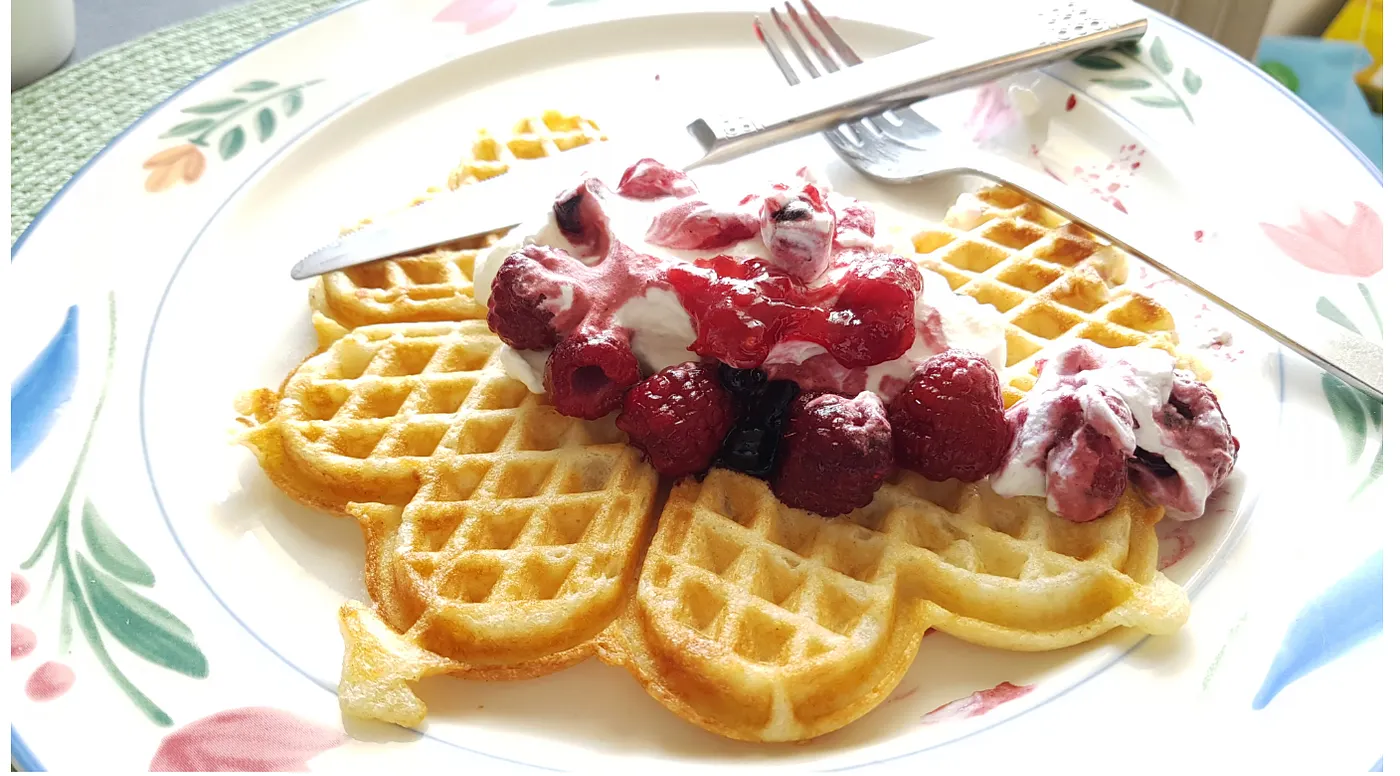
From the “Semla Comedown” to Waffle Anticipation
In Sweden, the period between late winter and early spring is marked by a specific kind of culinary transition. If you’ve spent any time in a Swedish city in February, you know the Semla—that iconic, cardamom-scented wheat bun filled with almond paste and mountains of whipped cream. It is the king of Fika during the cold months, peaking on Fettisdagen (Fat Tuesday).
But as March rolls in, a “Semla comedown” begins. Bakeries slowly phase out the heavy buns, and the air starts to feel a bit different. That’s when the anticipation for March 25 starts to build. While Semla is about surviving the dark winter, Våffeldagen (Waffle Day) is about welcoming the light. It’s the sweet signal that spring is finally, officially, on its way.
The Linguistic “Oops” that Shaped a National Tradition
The reason for this celebration is one of the most charming linguistic “oops” moments in history. March 25 is the Feast of the Annunciation, known in Swedish as Vårfrudagen (Our Lady’s Day).
Over centuries, the pronunciation shifted. In various Swedish dialects, Vårfrudagen began to sound like Våffeldagen (Waffle Day). Rather than correcting the mistake, the Swedes—and many of their neighbors—decided it was a fantastic reason to start a tradition.
While Våffeldagen is deeply rooted in Sweden, it isn’t a lonely island of celebration. This day is marked across Norway, Denmark, and several other Western European countries, making it a truly regional embrace of spring and flour.
Curious about my journey? Transitioning from a fast-paced Korean corporate life to the slow-paced, waffle-filled winters of Sweden wasn’t easy. You can read more about me and my journey on my About or Start Here page.
A Walk Down Memory Lane: Gothenburg’s Vasaplatsen
My first real encounter with the gravity of Waffle Day was in the spring of 2016. I was mid-way through my master’s program in Gothenburg, still trying to decode the many layers of Swedish social etiquette. My classmate R, a sharp and stylish second-generation immigrant, stopped me near the university library.
“Hyun, you haven’t forgotten, have you? It’s Våffeldagen. We are going to Vasaplatsen.”
She led me to a tiny, narrow shop simply called Waffles Café. It was a vertical sliver of a building, barely wider than a hallway, but the line outside was staggering. In Seoul, if a dessert becomes trendy, it appears on every menu overnight. In Gothenburg, people were surprisingly loyal to the “wait-and-see” approach, standing in the biting March wind just for a single heart-shaped treat.
Watching the steam rise from the waffle irons in that cramped space remains one of my warmest memories of Sweden. It wasn’t just about the flour and sugar; it was about the collective sigh of relief a whole city takes when they realize winter is almost over.
Update for 2026: Sadly, the Waffles Café at Vasaplatsen has since closed its doors. While it’s no longer there to serve the long lines of students, it remains a fond and nostalgic memory of my years in Gothenburg. It taught me something about the Swedish market. Back in 2016, you could count the number of waffle-serving cafes on one hand. Ironically, the supermarket chain ICA would be filled with waffle irons for sale, yet finding a ready-made waffle was nearly impossible. My friend and I used to lament: “Why are they selling the tools everywhere, but not the food itself?”
Interestingly, things are changing. A quick search on Google Maps in Gothenburg today reveals a much larger selection of cafes serving waffles than a decade ago. It seems the pace and scope of change in Sweden’s café culture have shifted significantly. The country is moving away from its traditionally slower, more rigid seasonal availability, embracing a much faster and more diverse dessert scene than the one I experienced just a decade ago.
The Anatomy of a Swedish Waffle: From its shape to the best combination
If you’re imagining a thick, cake-like Belgian waffle or a syrupy American stack, think again. The Swedish waffle is its own category of perfection.
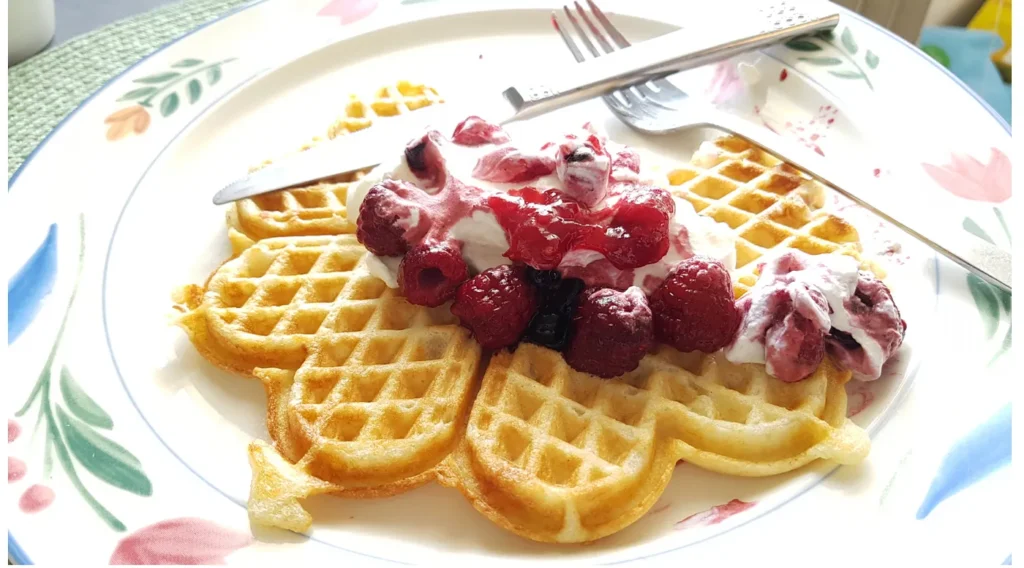
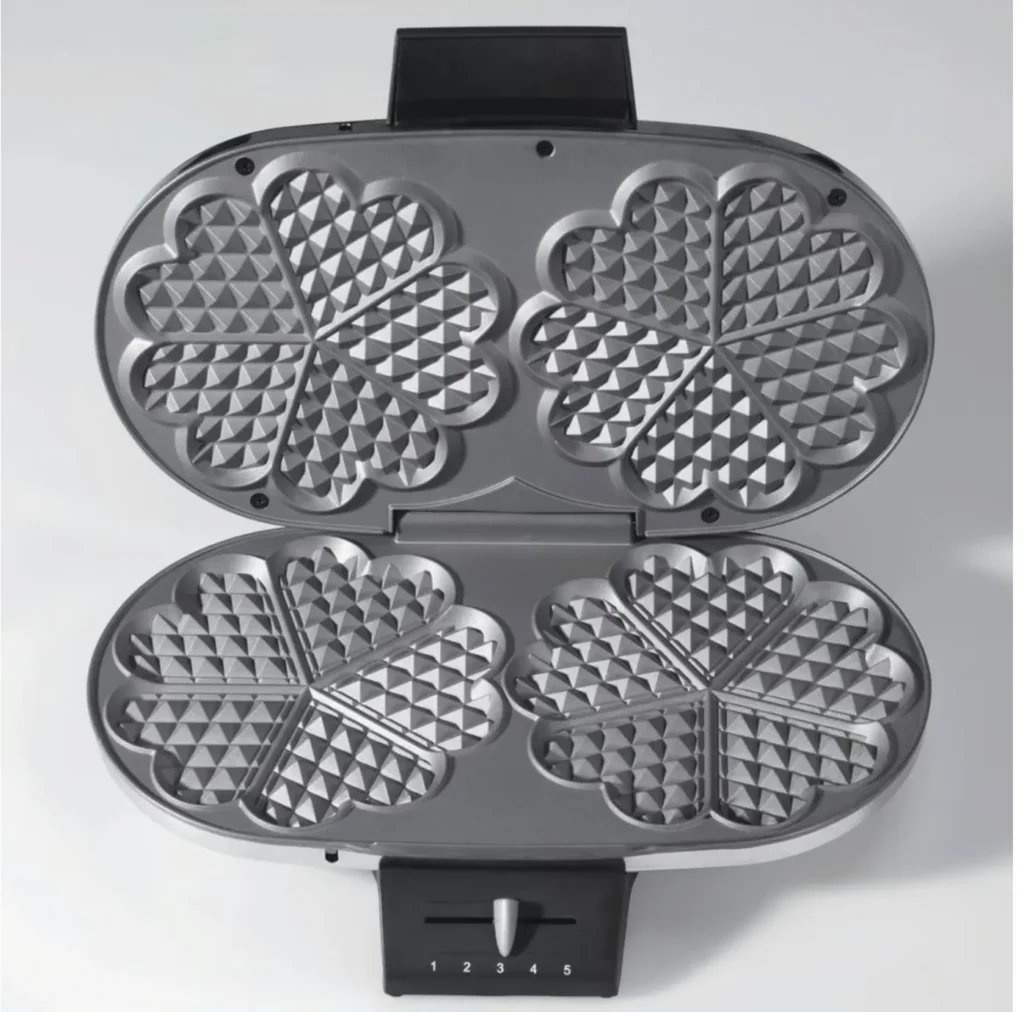
- The Heart-Shaped Iron: Swedish waffles are always thin and pressed into a circular iron that divides them into five connected hearts.
- The Secret to the Crunch: The best Swedish waffles use carbonated water (bubbelvatten) or a specific ratio of melted butter to flour to ensure they are incredibly crispy on the outside while staying light inside.
- The Toppings (The Non-Negotiables): You will rarely see maple syrup or chocolate sauce on a traditional Swedish waffle. Instead, it’s all about the Sylt och Grädde (Jam and Cream).
- Cloudberry Jam (Hjortronsylt): Often called “The Gold of the North,” this tart, golden jam is the ultimate luxury topping.
- Raspberry or Strawberry Jam: The classic, nostalgic choice.
- Whipped Cream: Always unsweetened or only lightly sweetened, to balance the tartness of the jam.
Connecting the Dots: From Swedish Hearts to Korean Croffles
As I sat there in 2016, eating my jam-covered hearts, I couldn’t help but draw parallels to my home. The thinness of the Swedish waffle felt strikingly similar to the street waffles sold near Seoul’s subway stations—the ones spread with a thin layer of apple jam, and a thick layer of whipped cream.
Years later, after moving back to Korea, I saw the “Brown Cheese” craze take over Korea. When I first saw a Brown Cheese Croffle in hip cafes around Seoul, I felt a jolt of recognition. I had first tasted that salty, caramel-like Brunost(Brown Cheese) on a waffle in Norway back in 2018.
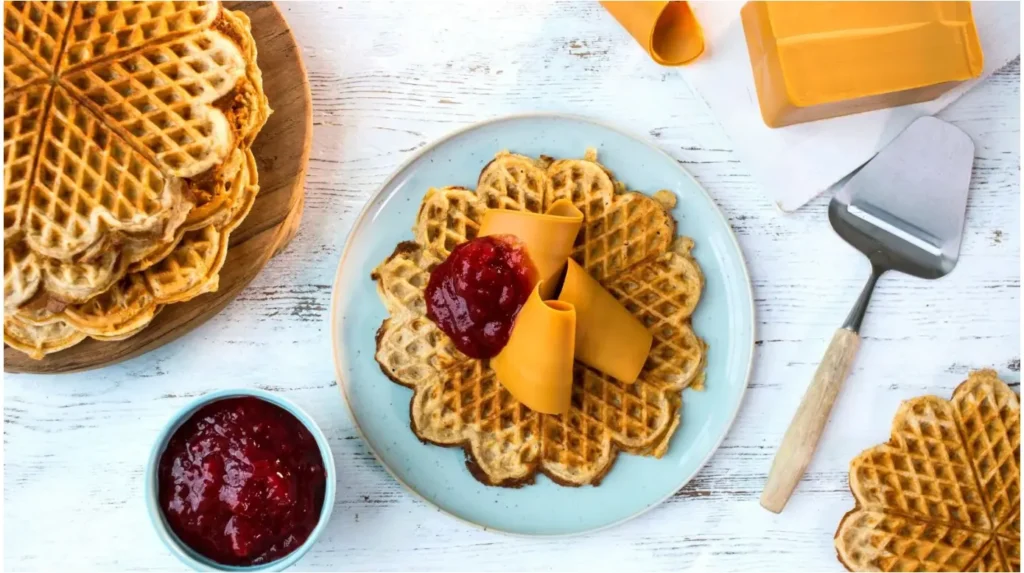
Korea’s ability to take a Nordic staple and turn it into a global “Vibe” is something I find fascinating as a marketer. It shows that while the traditions may be local, the love for a crispy, sweet-and-salty carb is truly universal.
“These culinary intersections aren’t limited to Northern Europe and Korea. My time in Bangsar, Kuala Lumpur, offered another fascinating perspective. At a hidden gem called Cookiecrumbs, I was surprised to find an ‘Injeolmi Cookie’—a thick, New York-style cookie stuffed with chewy Korean roasted soybean mochi.
Seeing a staple of Korean traditional dessert reinvented in a trendy Malaysian bakery felt like the southern counterpart to the ‘Brown Cheese Croffle’ craze in Seoul. It’s a testament to how food cultures today are no longer isolated; they travel, transform, and take root in unexpected places. Whether it’s a Swedish heart-shaped waffle or a Malaysian-made Injeolmi cookie, these treats prove that the language of sweetness is truly universal.”
Double the Waffles: March 25 vs. August 24
One thing I found fascinating during my research is that if you truly love waffles, you don’t have to wait a whole year.
While the Nordic countries celebrate on March 25 due to the religious linguistic quirk, the United States has its own National Waffle Day on August 24. Why August? That was the day the first waffle iron was patented in the U.S. back in 1869.
So, you have two perfectly valid reasons to celebrate:
- March 25: To honor the Swedish “Our Lady’s Day” accident and the arrival of spring.
- August 24: To honor the industrial invention of the waffle iron.
Why These “Excuse-Driven” Holidays Matter
In our increasingly digital world, having a day dedicated to a simple, heart-shaped piece of bread matters. It’s a reason to slow down, heat the iron, and share a moment of sweetness. Whether you follow the Swedish tradition of jam and cream or the Norwegian love for brown cheese, March 25 is a reminder that spring is finally here.
Do you have a favorite waffle tradition in your country? I’d love to hear about the toppings or customs I might have missed!
References & Further Reading
- Visit Sweden: Waffle Day – Våffeldagen
- Wikipedia: Waffle day
- Swedishness: Våffeldagen: Sweden’s Delicious Waffle Day 🧇🇸🇪